G02 Golden Sample
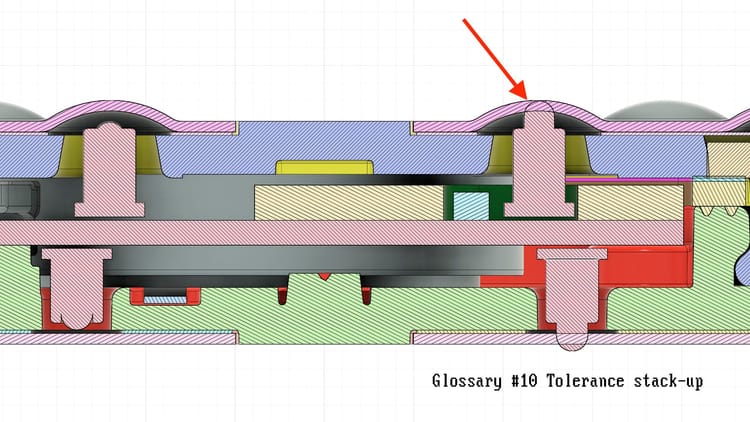
I've seen founders send perfect drawings and tolerance stacks, then act surprised when the production unit feels "cheap" despite being within spec.
Specs describe intent. A golden sample defines the standard.
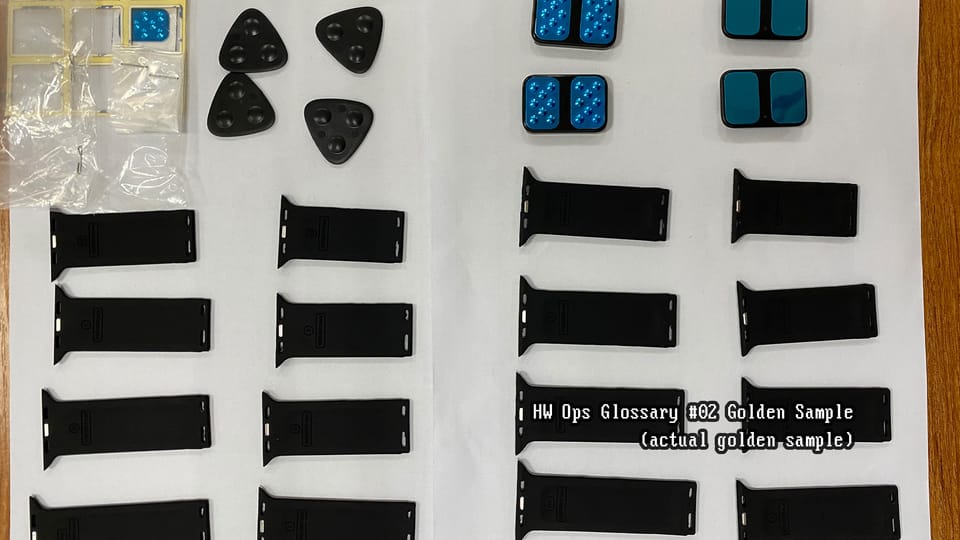
A golden sample is a physical reference unit that both parties sign off on before mass production starts. It captures what documents cannot: how the surface texture actually feels, how the color reads under warehouse lighting, what level of cosmetic variation is acceptable, whether the button click feedback matches expectations.
You approve it, seal it, label it with date and signatures, and it becomes the benchmark for every production unit that follows.
Without a golden sample, you are negotiating quality retroactively through email threads and subjective language like "looks darker than expected" or "finish feels rougher than sample." That negotiation costs you time, margin, and trust.
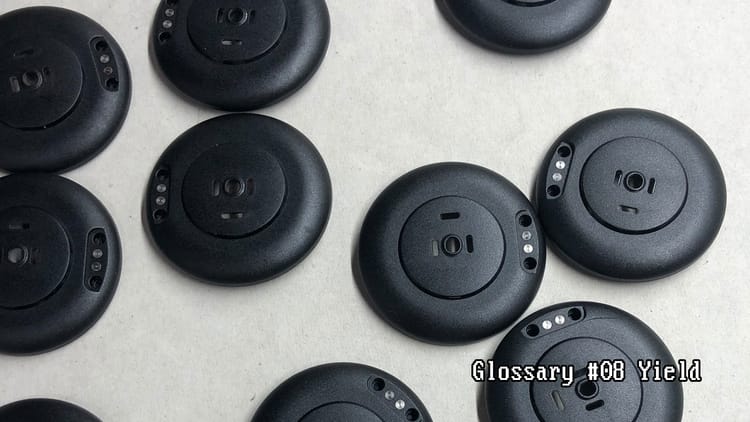
The story that taught me this happened during incoming QC on a consumer electronics project. We flagged units where the enclosure texture felt rougher than what we approved during PVT. The factory pushed back: they pointed to the drawing and the surface-finish spec (Ra/texture standard) and said it was compliant. The conversation stalled for two weeks while we argued over what "acceptable" meant.
We eventually settled at a discount, but the real cost was the delayed launch and the damage to the relationship. If we had a sealed golden sample on both sides of the table, the conversation would have taken five minutes: put the production unit next to the reference, compare, decide.
Now our process requires two identical sealed samples before tooling approval: one stays with us, one stays at the factory. Every incoming inspection starts with a side-by-side comparison against that reference. Disputes dropped because both teams have the same physical object to point at.
The golden sample also protects you during supplier transitions. When you move production to another factory, you hand them the sealed unit and say: match this. No ambiguity.
Practical golden sample checklist:
- Approve physical units only. If you can't visit the factory, have them courier the samples. Never approve based on photos alone.
- Seal in tamper-evident packaging, label with date/revision, and have both sides sign off.
- Store one at your location and one at the factory, both protected from tampering. You can also keep another one for the inspection company if you use 3rd party inspections.
- Reference the golden sample explicitly in your QC inspection criteria.
- Update the sealed sample when you approve engineering changes that affect appearance or feel.
Specs tell the factory what to aim for. A sealed sample proves what you will accept.