Lawsuits don't ship products
Hardware founders often think the supplier contract is protection. In practice, it rarely is. After a decade of building hardware in Asia, I've learned what actually works. Here's the playbook.
For most startups, "we'll sue" is not a plan. Even with a solid contract, disputes can drag out once you include appeals and enforcement, and the cost in money and focus can outweigh the upside. It rarely fits a startup runway.
Your contract still matters for IP, tooling ownership, confidentiality, and remedies. It's just not the main day-to-day protection mechanism.
What actually works:
Treat your Proforma Invoice (PI) + spec pack (drawings, photos) as the operating document the factory will follow. Having a "Golden sample" also helps. This is where you define "pass/fail", delivery milestones, payment triggers, and what happens if something misses.
- Invest in due diligence
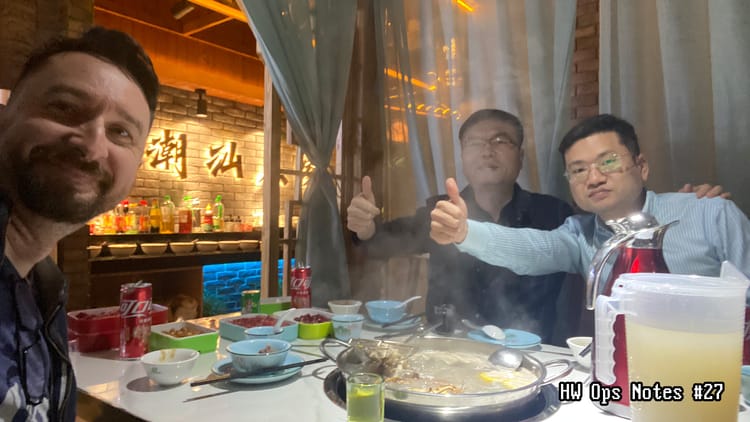
Before a deposit: verify they shipped something similar recently, confirm what is done in-house vs outsourced, and speak to at least one customer who shipped a real batch. - Build real relationships with the owner/GM
You need an escalation path to someone who can approve rework and credits. If you can only reach sales, it tends to get expensive later. I'll put the link to my post about it in the first comment. - Make the PI unambiguous
List the exact product/version, packaging/labels, delivery milestones, and acceptance criteria. Define whether substitutions are approved or not. Do not rely on what is implied. - Plan for Murphy's Law (especially on first runs)
Assume delays and defects before the process stabilizes, and build buffer into timeline and cash so one slip does not become existential. - Make mistakes harder
Use design for manufacturing (DFM), reduce variants, and write "no substitutions without written approval" for critical items. - Verify at two moments that matter
Inspect before final payment (pre-shipment), then spot-check on arrival for the few things that can break the customer experience. Track defects by batch so you see drift early. - Push for remedies, professionally
Ask for a specific remedy: rework, replacement, partial credit, expedited remake, or shipping upgrade. In my experience, firm + factual + documented works better than emotional escalation. - Close the feedback loop
Every incident should change something: the PI/spec, the checklist, or the factory instructions. Otherwise you are scheduling the same failure for the next batch.
If you manufacture in Asia, you win with clear requirements, simple checkpoints, and a working escalation path.