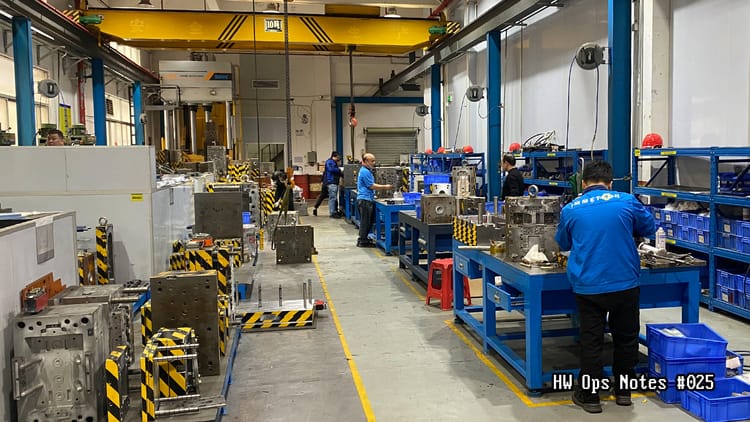
The risk you cannot see on a Gantt chart
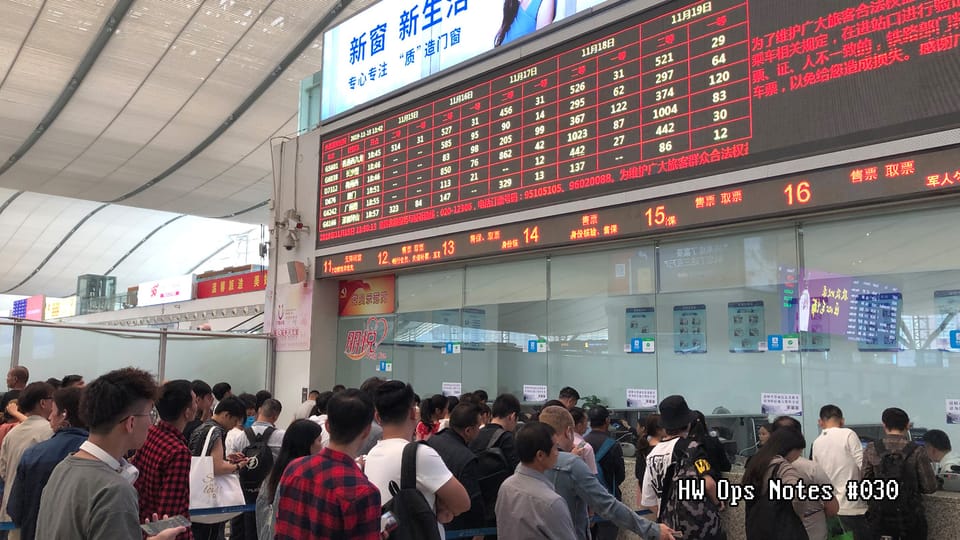
Your factory does not pause for Lunar New Year and resume where it left off. A meaningful share of the workforce leaves before the holiday and never comes back.
This is the part of lunar calendar shutdowns that most Western hardware timelines miss. The statutory holiday is roughly a week in both China and Vietnam, but many factories close for 1-3 weeks depending on region and labor model. The real production impact can stretch to 4-8 weeks, and longer in complex supply chains.
The reason is not the calendar. It is the workforce reset.
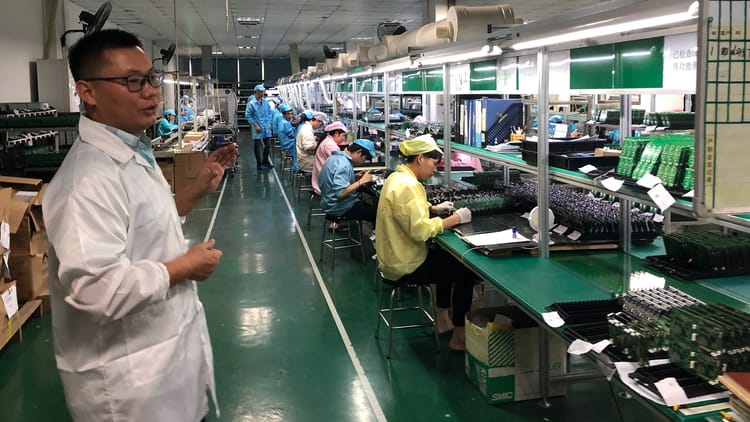
Many factories run on migrant labor. Workers travel home for CNY or Tet, sometimes across the country. Contracts end, people leave early, and attrition accelerates weeks before the holiday. A significant share will not return.
After the holiday, factories recruit replacements. New hires who have never touched your product, your fixtures, or your inspection criteria.
The shutdown is a week or two. The workforce reset takes way longer.
Here is what the ramp-up looks like in practice:
- Workforce turnover often runs 10-30% in labor-intensive categories, though it varies widely by factory maturity and retention practices
- Replacement operators typically need 2-6 weeks to reach baseline throughput and quality, depending on product complexity and automation
- Defect rates spike because new hands are learning your tolerances from scratch
- Yield drops, meaning your effective per-unit cost rises even if the quoted price holds
- Plan for materially reduced line efficiency for the first few weeks while supervisors focus on onboarding instead of optimization
One more trap: pre-holiday rush shipments often carry higher defect rates as factories push volume before people leave.
Component suppliers in Shenzhen go through the same cycle. Even if your assembly factory reopens on time, parts feeding it can be delayed by the same churn upstream.
CNY and Tet are uniquely disruptive because of the scale of travel and labor turnover. Holidays like Songkran and Chuseok can cause slowdowns, but usually shorter and with less workforce reset.
What experienced operators build into their programs:
- Lunar shutdowns mapped into every timeline from day one, not patched in during December
- Component orders placed 8-10 weeks before major holidays instead of the standard 4-6
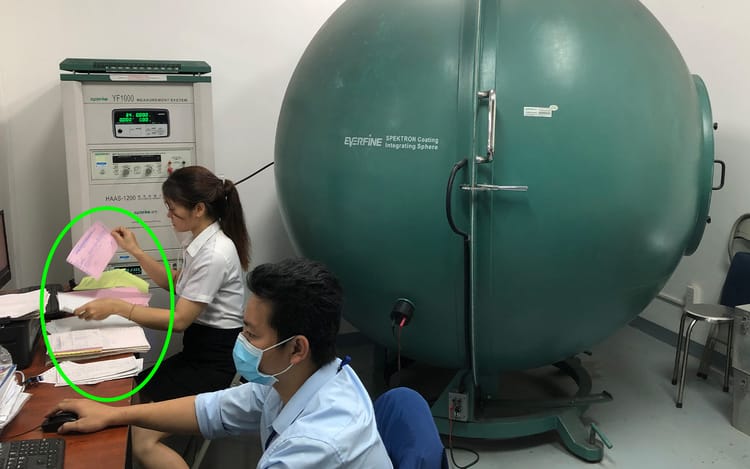
- A pre-holiday golden sample run to lock quality benchmarks while the trained workforce is still on the line
- Post-holiday inline inspection increased for the first 3-4 weeks of ramp
- Yield projections that assume reduced efficiency for the first month back