This will kill your hardware startup
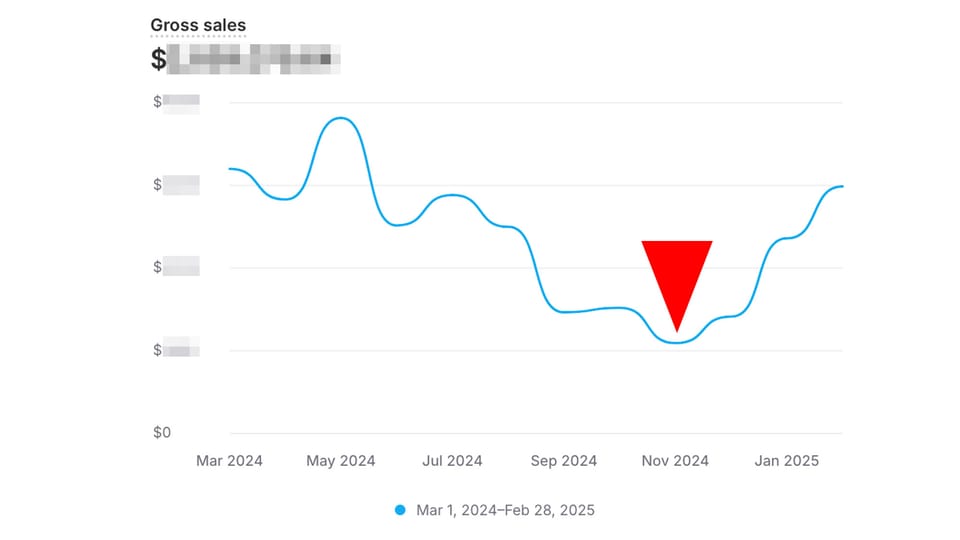
You just launched your consumer product, and everything looks great. Sales are growing, CAC is decreasing, and you just wired $300K for the next batch of goods to arrive in 3 months.
And then, sales crashed. CAC started to grow, no matter what you do, and the customers stopped coming. You pushed your sales team, and maybe your ad agency (if you have one), but nothing worked.
Sounds familiar? There is good news and bad news. The good news is that, likely, there is nothing wrong with your product or sales funnel. This is seasonality.
The bad news is that you didn't come prepared.
Your product is seasonal, even if you believe it is not. Many founders made this mistake (myself included).
Seasonality for swimwear and heaters is obvious. But plenty of "everyday" categories have seasonality too. It is just hidden.
Example: fitness products often spike in winter. Not because the product changes, but because people:
- make New Year resolutions
- think "I need to look better by summer"
- spend more time indoors and less on travel.
Seasonality is not a marketing problem. It is a cash problem.
If you sell physical products, seasonality hits you from both sides:
- Peak months: you run out of stock and leave money on the table
- Low months: you freeze working capital in inventory and quietly bleed runway
If you are not prepared, that swing can wipe your business out if you planned runway on a flat curve.
What to do (simple, not easy):
- Map your high and low seasons for your niche (if you don't have enough of your own data, search the internet and ask peers, if possible)
- Which months are above average?
- Which months are below average?
- By how much?
- Measure what seasonality does to CAC, not just revenue. In the low season, CAC usually gets worse. People are less motivated, conversion drops, and CPMs can jump 50-200% in some niches.
- Use the map to run the business like an operator
- Peak season: protect inventory and fulfillment capacity
- Low season: reduce marketing to keep CAC sane, cut non-essential spend, protect cash
Knowing your high and low seasons helps with:
- Demand forecasting
- Realistic growth projections
- Runway estimates that do not surprise you in month 7
One lever that can reduce seasonality risk: attach recurring revenue (subscription/membership) to the product. I’ll break down what works (and what backfires) in the next posts.
P.S. The image is the real screenshot of the Shopify sales report from one of my projects. It shows the peak season around the spring and the lowest season around the fall.