These are your SOPs. Can these workers read them?
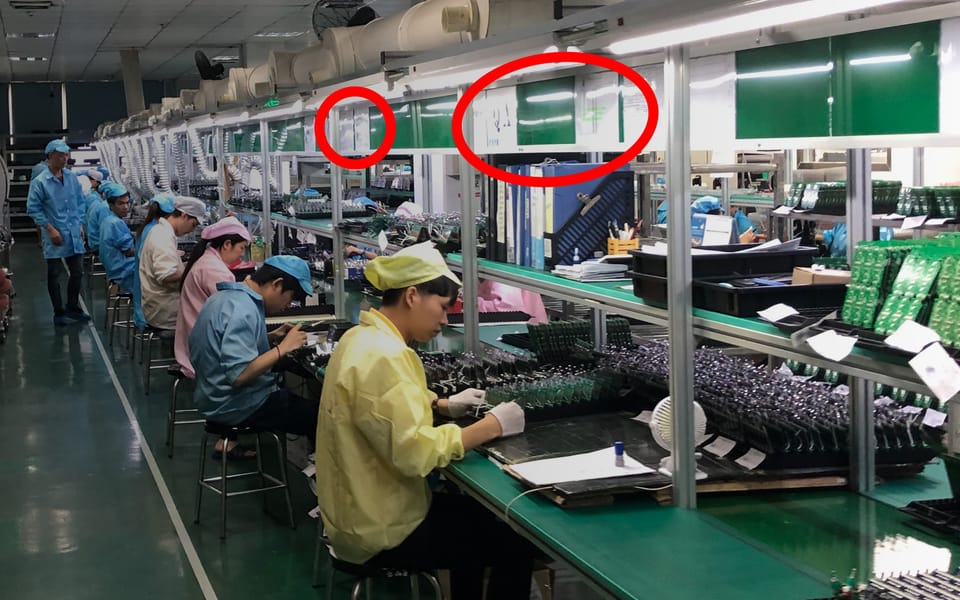
Recently, I saw an SOP (Standard Operating Procedure) where the device's enclosure was named "a dwelling." Somebody at the factory auto-translated the English SOP into Chinese, and the "housing" (外殼, like a hard shell) became "housing" (住宅, like dwelling).
This is what happens if you send an English SOP to a non-English speaking factory: somebody will need to translate it to their local language, and that "someone" may not really understand exactly what is meant in the SOP.SOPs/WIs (Work Instructions) are what the line actually follows.
If the instruction is ambiguous or misread, operators improvise. That shows up immediately as rework, scrap, and defects that escape to customers.
So, translating your SOPs into the factory’s language is a simple but effective method to increase yield.
Here are a few practical tips on translating SOPs:
- Make the SOP bilingual: make it in both your language and the language of the factory. This makes the SOP usable for both your team and the factory team.
- Very important: Always check the translation when releasing a new revision of the SOP. If the translation doesn't get updated, your SOP will essentially be the wrong version.
- When you use an automated translation tool, e.g. Google Translate, check the translation by running the reverse translation: from the foreign language into your language. This helps to find translation errors. Using another tool for reverse translation is even more accurate.
- Avoid words that have more than one common meaning. For example, instead of the word "housing", use "enclosure"
Treat translation like tooling: cheap to do right, expensive to ignore.